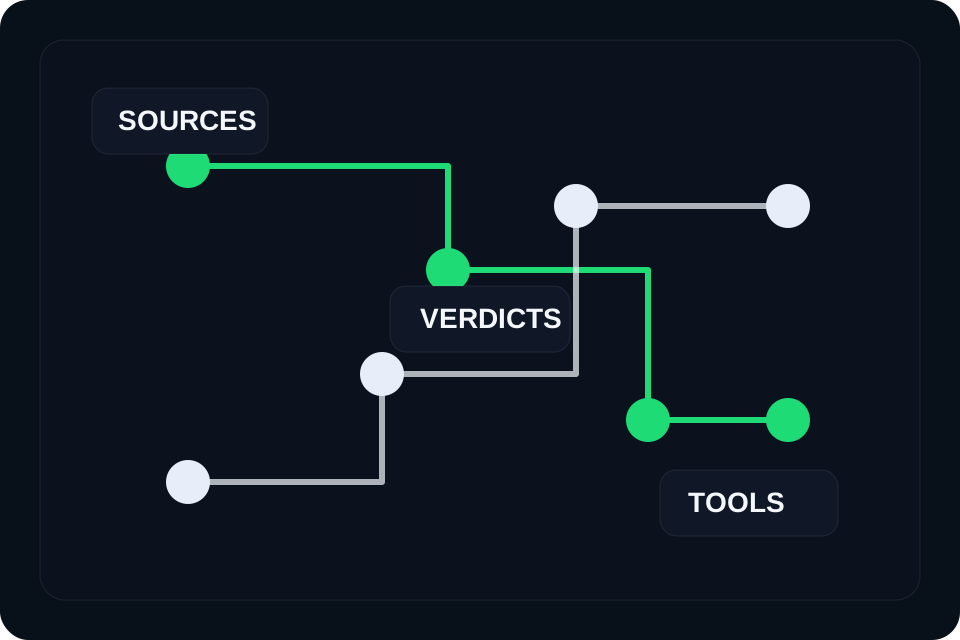
The site only works if the sources, verdicts, and tools connect cleanly. This page explains that contract.
Methodology
This page explains what information is used, how tradeoffs are handled, and why reviewed dates appear across the site.
The site only works if the sources, verdicts, and tools connect cleanly. This page explains that contract.
Follow the research flow
Core principles
The goal is simple: help you understand what fits, what does not, and why.
Vehicle specs, charging claims, and official positioning start with manufacturer or official program information whenever possible.
Every page tells you who the vehicle fits best and what could still make it the wrong choice.
Comparisons and tools rely on variables that work internationally, such as distance, charging access, and energy cost.
Every data-backed page shows when it was last checked and points to the source set behind the verdict.
Buyer decision signals
Consumer research points to a two-layer model: buyers first decide whether an EV at all (running costs, convenience, experience), then decide between specific models (charging, range, cost, service). The first layer sets context; the second is where verdicts and shortlist logic do most of their work.
Consumer surveys consistently place fuel savings and lower maintenance at the top of why buyers first consider an EV — the monthly cost comparison with petrol is a practical, recurring motivator.
Reliable overnight home or workplace charging is the single sharpest dividing line in EV ownership satisfaction. Public-heavy routines are workable but more planning-intensive, and this shows up clearly in ownership studies.
Highway speed, climate control load, and cold weather routinely produce a gap between headline and real-world range. Verdicts account for this so buyers plan around the usable buffer, not the best-case figure.
The full ownership picture includes energy, insurance, maintenance differences, and depreciation over the holding period. Buyers who run this math make more durable decisions than those comparing MSRP alone.
Brand track record, dealer quality, and whether service infrastructure exists in your area affect how ownership feels after purchase — particularly for buyers outside major cities with established EV service coverage.
Go deeper
A full explainer on the two-layer model — what draws buyers toward EVs and what decides between specific models — with sources from consumer research.
Real-world range
Carmakers quote range on a lab test cycle that almost always reads higher than daily driving, so a single headline number can mislead. On each car page we show a realistic range band next to the claimed figure. When we have owner-reported data we use it; otherwise we discount the claimed range based on its test cycle, because some cycles are more optimistic than others.
The European cycle runs optimistic. We show roughly 75–88% of the claimed figure for a typical mix of city and highway driving.
The US cycle is the closest to real driving, so the band stays high — roughly 88–100% of the claimed number.
India's ARAI cycle is the most optimistic of the three. We show roughly 65–80% of the claimed figure, closer to what owners report on real commutes.
These bands are guidance, not a guarantee. Your real range still depends on speed, weather, terrain, load, and how full you charge.
What appears on the page
Each profile or comparison should tell you what the car does well, what could hold it back, how current the information is, and which sources were used to support the verdict.
What stays out
If a claim does not help a buyer judge fit, cost, charging, or ownership confidence, it should not take up space on the page.
Non-negotiable checklist