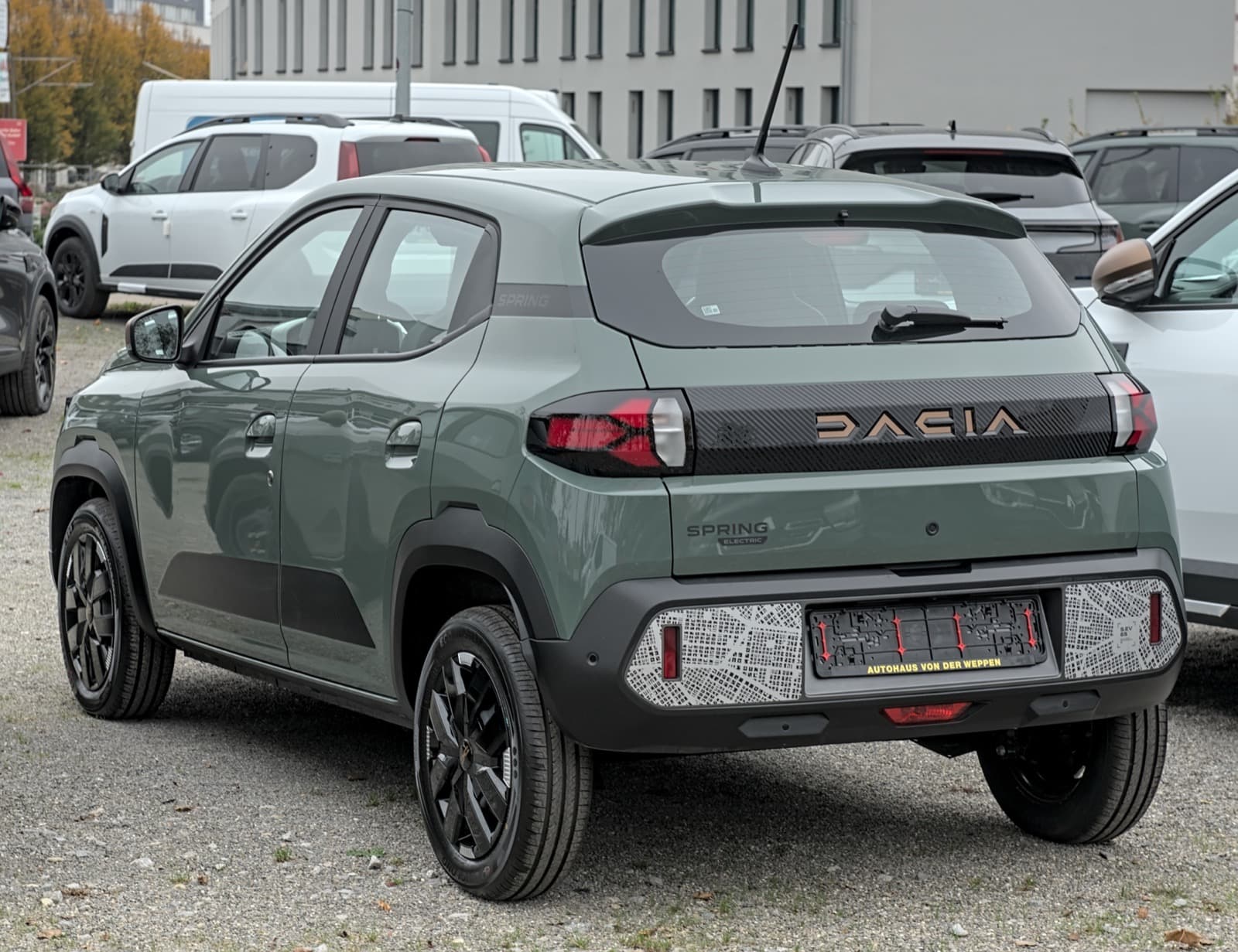
The Dacia Spring Electric 100 is Europe's cheapest new electric car: a 24.3 kWh LFP pack with 24.0 kWh usable on a 400 V system, 226 km WLTP (TEL) range against an EV Database real-world estimate of 160 km, 40 kW DC charging for 10-80% in 30 minutes, 6.6 kW AC for a full charge in 4 hours 30 minutes, a 75 kW (102 PS) front motor with 137 Nm, 0-100 in 9.6 seconds, a 125 km/h top speed, a 308-litre boot with a 34-litre frunk, 3.6 kW vehicle-to-load and an 8-year battery warranty, from £12,990 in the UK.
Last verified 20 September 2026
City hatchbackSingle motor FWD4 seatsAccessible entry-market
Dacia Spring works best when buyers who want the cheapest new electric car they can drive off a forecourt — £12,990 on the road in the uk, €20,800 in the netherlands and predictable charging matter more than headline acceleration.
Check the practical numbers for this EV before you shortlist it.
These previews stay short on purpose. The full tools keep the detailed inputs, but this page now shows what changes first when you move from interest to a real ownership decision.
Cost snapshot
514/yr
Using this EV's battery, range, and the cost calculator's starter inputs. Treat the amount as the same money unit you enter in the full tool.
Starter setup only: 9 hours of dedicated wallbox or level 2 charger charging gives this EV a 100/100 fit score. Use your real parking and install setup in the full tool.
Best for buyers who want a genuinely cheap, light and easy city car and who charge at home, and who can live with a small battery, slow DC charging, four seats and no heat pump.
Buyers who want the cheapest new electric car they can drive off a forecourt — £12,990 on the road in the UK, €20,800 in the Netherlands
City drivers — EV Database estimates about 255 km of city range in mild weather from a 24 kWh battery, and the car is only 3,701 mm long with a 9.6 m turning circle
Small households that still need to carry things — 308 litres in the boot, 1,004 litres with the rear seats folded, plus a 34-litre frunk and 3.6 kW vehicle-to-load
Cons
What to watch before you buy
226 km WLTP is a small battery by 2026 standards, and EV Database's combined real-world estimate drops to 135 km in cold weather against 190 km in mild weather.
DC charging peaks at just 40 kW, so 10-80% takes 30 minutes and no faster charger will speed that up. A home wall box is limited to 6.6 kW and takes 4 hours 30 minutes for a full charge.
It seats four, not five, and it cannot tow: EV Database records no tow hitch and 0 kg braked and unbraked.
There is no heat pump, which is part of why the cold-weather range drops so far.
This is the Renault CMFA-EV platform rather than a dedicated EV architecture, and no Euro NCAP result is recorded here because none is published on the source page.
Reviewed 2026-09-20
Specs that affect ownership
Focus on the numbers that actually change the experience.
On the WLTP cycle this EV is certified at 226 km. In everyday mixed driving, expect roughly 110–255 km (owner-reported). How we estimate this.
Dacia Spring Electric 100 specifications
Spec
Value
Price & cost
Price
Accessible entry-market
Performance
0–100 km/h
9.6 s
Top speed
125 km/h
Drive
Single motor FWD
Range & charging
Range
226 km (WLTP)
Efficiency
9.4 km/kWh
Battery
24 kWh
Fast charge (10–80%)
10-80% in 30 min (40 kW peak, 35 kW avg) — a faster charger makes no difference, the car is the limit
Frequently asked about the Dacia Spring Electric 100
Is the Dacia Spring Electric 100 worth buying?
Best for buyers who want a genuinely cheap, light and easy city car and who charge at home, and who can live with a small battery, slow DC charging, four seats and no heat pump.
Who is the Dacia Spring Electric 100 best for?
Best fits include: Buyers who want the cheapest new electric car they can drive off a forecourt — £12,990 on the road in the UK, €20,800 in the Netherlands, City drivers — EV Database estimates about 255 km of city range in mild weather from a 24 kWh battery, and the car is only 3,701 mm long with a 9.6 m turning circle, and Small households that still need to carry things — 308 litres in the boot, 1,004 litres with the rear seats folded, plus a 34-litre frunk and 3.6 kW vehicle-to-load.
What should I watch out for with the Dacia Spring Electric 100?
The main caveats are these: 226 km WLTP is a small battery by 2026 standards, and EV Database's combined real-world estimate drops to 135 km in cold weather against 190 km in mild weather; DC charging peaks at just 40 kW, so 10-80% takes 30 minutes and no faster charger will speed that up. A home wall box is limited to 6.6 kW and takes 4 hours 30 minutes for a full charge; It seats four, not five, and it cannot tow: EV Database records no tow hitch and 0 kg braked and unbraked; There is no heat pump, which is part of why the cold-weather range drops so far; and This is the Renault CMFA-EV platform rather than a dedicated EV architecture, and no Euro NCAP result is recorded here because none is published on the source page.
What is the real-world range of the Dacia Spring Electric 100?
Expect roughly 110–255 km in everyday mixed driving (owner-reported). The certified figure is 226 km on the WLTP cycle.