Snapshot
What is live for Nissan right now
7 vehicles • 7 reviews • 7 comparisons
0 used-EV guides • Updated 2026-06-06
Brand hub
Start here when Nissan electric cars are already on your shortlist and you want every live model page, review, comparison, and used-EV guide in one place before you decide which car deserves the next hour of research.
It groups together the live pages already published for Nissan electric cars. Every linked page carries its own sources and review dates.
Snapshot
7 vehicles • 7 reviews • 7 comparisons
0 used-EV guides • Updated 2026-06-06
Recommended next stops
Vehicles
Open the vehicle profile when you want the verdict, key tradeoffs, charging context, and official source links in one place.
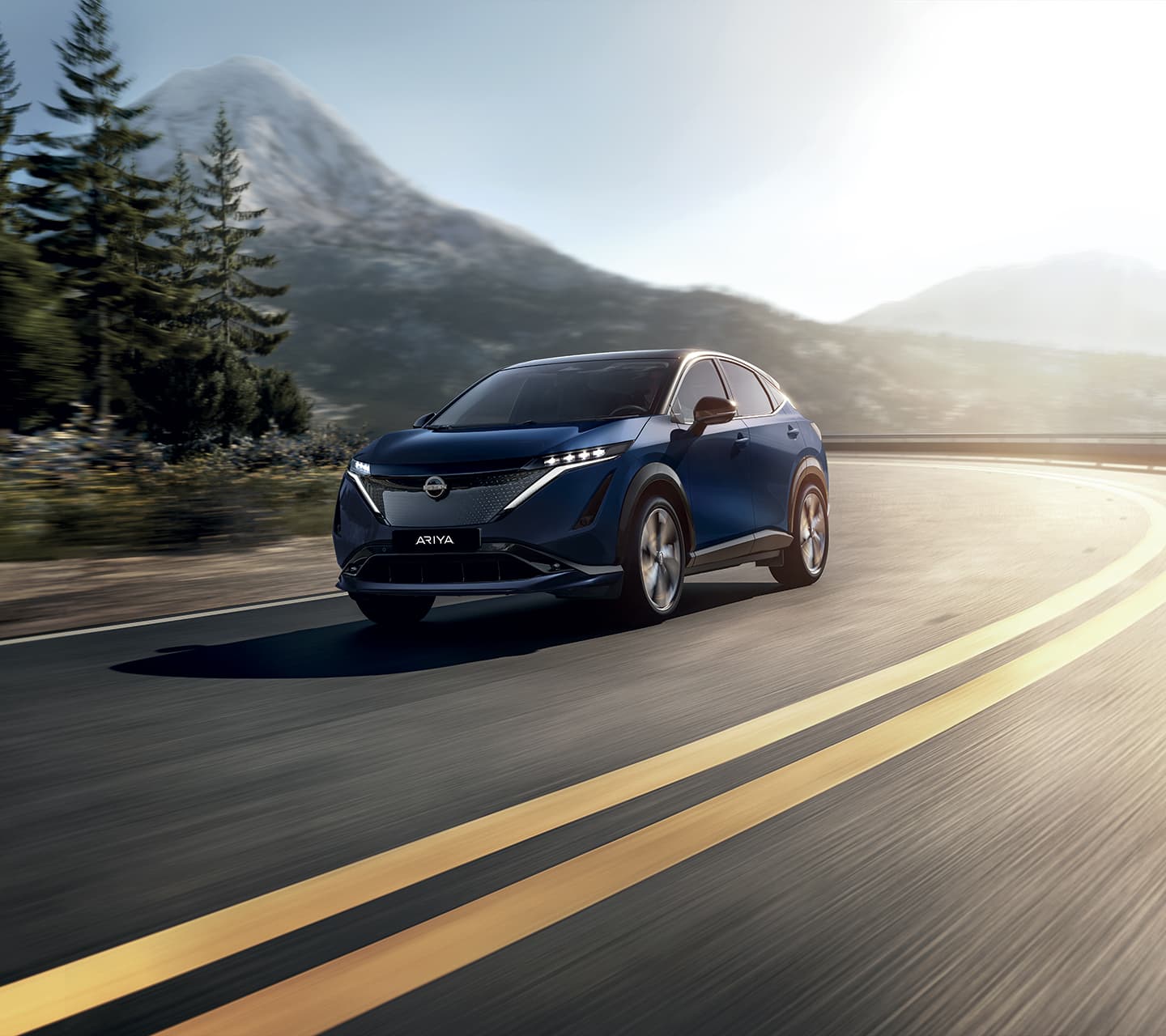
This 87 kWh Ariya entry is the larger-battery Ariya ownership brief: a family crossover format with long-range headroom and credible DC charging, best when you want calmer comfort more than the flashiest fast-charge theatre.
The Ariya 63 kWh 7kWCh is the lower-battery Ariya option for buyers who want Nissan's family crossover shape and cabin feel without paying for the long-range hardware.
The Ariya Shiro 63 kWh is the entry-trim Ariya brief: the same comfort-first crossover shape and 63 kWh battery, but positioned for buyers who want the lower spend rather than maximum AC charging hardware.
The Ariya 63 kWh 22kWCh keeps the smaller-battery Ariya ownership brief but makes it easier to live with if you regularly use three-phase destination AC charging, because it can meaningfully shorten compatible wallbox sessions versus the 7 kW car.
The Ariya 87 kWh 22kWCh gives Nissan's global EV lineup its clearest long-range family answer by combining the larger battery, stronger AC hardware, and a still-credible 130 kW DC ceiling in a calmer crossover package.
This 87 kWh Ariya e-4ORCE trim is the AWD version of Nissan's long-range family crossover brief, pairing the larger battery and stronger 22 kW AC hardware with dual-motor traction for buyers who value stability and pace more than chasing the fastest possible DC charge curve.
The Ariya 87 kWh 7kWCh is the long-range Ariya ownership brief for buyers who want the bigger battery but do not need the 22 kW AC hardware found on the higher-spec trim.
Reviews
Reviews are where the shortlist gets sharper: buyer fit, charging reality, and the ownership tradeoffs that matter after the brochure stops sounding impressive.
The Ariya 87 kWh 22kWCh is a quietly strong family EV if your day-to-day ownership leans heavily on home or destination charging. The combination of a large 87 kWh battery, a credible WLTP range claim, and unusually strong 22 kW AC capability makes it an easy car to live with when you can charge overnight or at work. It is not the fastest-charging EV on a motorway day, but for many buyers that trade is worth it if comfort, calm road manners, and AC convenience matter more than headline DC speed.
The Ariya 87 kWh is best understood as a comfort-first family EV with a genuinely useful large-battery ceiling on paper. It does not win on headline fast-charging theatre, but it remains a credible long-distance family crossover when most charging is predictable (home or destination AC) and fast charging is an occasional support rather than the daily plan.
The Ariya e-4ORCE is the AWD version of Nissan's calmer family-crossover EV brief: it keeps the big-battery ownership story and adds extra traction and pace for buyers who care about stability, wet-weather confidence, or hilly routes. The trade is efficiency and charge-stop theatre — AWD typically reduces range, and the Ariya's DC charging ceiling is still behind the newest 200–350 kW class rivals. It is best understood as a comfort-first AWD family EV that is easy to live with when home or destination charging is predictable.
The Ariya 87 kWh 7kWCh keeps the long-range Ariya ownership brief intact, but it is a better match for buyers whose routine is simple: charge overnight at home, and use DC fast charging occasionally for longer trips. Compared with the 22 kW Ariya, this trim gives away the standout destination-AC advantage, so it is harder to justify if you rely on workplace or three-phase wallboxes. If your charging life is mostly single-phase home AC, the 87 kWh battery is still the reason to buy it: calmer family comfort with less range anxiety, without paying for AC hardware you may never fully use.
The Ariya 63 kWh is the sensible pick if you want Nissan's comfort-first crossover feel without paying for the long-range hardware. It works best when your routine is city-plus-commute and home charging is available. If you regularly do intercity days, the bigger-battery Ariya trims stay the easier ownership story.
The Ariya 63 kWh 22kWCh is the niche but sensible Ariya if you regularly use three-phase destination charging. You are still buying the smaller-battery Ariya ownership brief, but the higher-spec 22 kW onboard AC hardware can materially shorten compatible workplace and hotel wallbox sessions. If your charging is mostly overnight at home on a basic single-phase setup, the cheaper 7 kW car is usually the cleaner value logic.
The Ariya Shiro 63 kWh is the Ariya for buyers who like Nissan's calmer crossover feel but do not need the bigger 87 kWh battery or the stronger 22 kW AC hardware. It makes sense as a family EV for city, suburban, and moderate longer use, provided your charging routine is built around overnight AC rather than frequent high-power destination charging.
Comparisons
Use the edited comparisons when two models survive the shortlist and you need the tradeoffs stated plainly.
Choose the Ariya if you prioritise calmer family-EV comfort and strong home/destination AC charging; choose the IONIQ 5 if your purchase brief is built around faster DC road-trip recovery.
Choose the Ariya 87 kWh if you want the larger-battery range ceiling and a calmer premium-leaning feel. Choose the ID.4 Pro Performance if you want a more conservative, familiar family crossover brief and are happy with slightly less range headroom.
Choose the Model Y if charging convenience and practical family packaging lead your shortlist; choose the Ariya e-4ORCE if you want AWD composure and 22 kW destination charging capability in a calmer-feeling crossover.
Choose the 22 kW Ariya if you will regularly use workplace or destination AC and want shorter AC sessions; choose the 7 kW Ariya if your charging is mostly overnight at home and you want the same battery without paying for the higher AC hardware.
Choose the 22 kW Ariya if you will regularly use workplace or destination AC and want shorter AC sessions; choose the 7 kW Ariya if your charging is mostly overnight at home and you want the simplest ownership brief.
Choose Shiro if the lower-trim Ariya package covers your needs and charging mostly happens at home. Choose the 22 kW derivative if compatible destination AC charging is common enough to save real time.
Choose the Ariya if comfort and crossover space matter more; choose the Kona Electric if compact size and efficiency-led ownership matter more.
Common questions
The Nissan electric cars covered on EVMotorworld are: Nissan Ariya. Each one has a live model page with a plain-language verdict, key specs, charging notes, and source links.
Claimed range across the Nissan electric lineup spans 402 km (Nissan Ariya 63 kWh 7kWCh, WLTP) to 531 km (Nissan Ariya 87 kWh, WLTP). Real-world range is typically lower — each model page shows a realistic band.
The Nissan Ariya 87 kWh leads the Nissan lineup with a claimed 531 km (WLTP) from its 87 kWh battery.