This comparison is most useful when both cars look viable and you need the decision to break on charging, value, or day-to-day fit.
Comparison detail
Both cars share the smaller 63 kWh Ariya battery and the same calm crossover ownership brief. The difference is use case: Shiro is the simpler entry-trim fit for overnight home charging, while the 22 kW car is better if workplace or destination AC charging is part of the routine.
| Spec | Nissan AriyaShiro 63 kWh | Nissan Ariya63 kWh 22kWCh |
|---|---|---|
| Price & cost | ||
| Price | Upper mid-market family crossover | Upper mid-market family crossover |
| Performance | ||
| 0–100 km/h | 7.5 s | 7.5 s |
| Top speed | 160 km/h | 160 km/h |
| Drive | Single motor FWD | Single motor FWD |
| Range & charging | ||
| Range | 402 km (WLTP) | 402 km (WLTP) |
| Efficiency | 6.4 km/kWh | 6.4 km/kWh |
| Battery | 63 kWh | 63 kWh |
| Fast charge (10–80%) | 33->268 km in 40 min on 150 kW CCS | 33->268 km in 40 min on 150 kW CCS |
| DC charging (peak) | 130 kW | 130 kW |
| AC charging | 7.4 kW | 22 kW |
| Connector | CCS | CCS |
| Space & practicality | ||
| Boot space | 468 L | 468 L |
| Frunk | 0 L | 0 L |
| Length | 4595 mm | 4595 mm |
| Towing capacity | 750 kg | 750 kg |
| Seats | 5 | 5 |
| Body style | Crossover SUV | Crossover SUV |
| Features | ||
| Vehicle-to-Load (V2L) | No | No |
| Heat pump | Yes | Yes |
| Verdict | ||
| Best for | FamiliesDaily commutingBuyers who want the Ariya entry trim | Buyers with regular workplace AC chargingFamilies who want calmer crossover comfortOwners who want faster AC top-ups without changing the battery size |
| Verdict | Best for buyers who want the Ariya's calmer family-crossover feel and mostly charge overnight at home, where the 7.4 kW AC hardware is enough. | Best for buyers who want the entry-battery Ariya but rely on workplace or destination AC charging often enough to benefit from 22 kW hardware. |
| Spec source | View source | View source |
This comparison is most useful when both cars look viable and you need the decision to break on charging, value, or day-to-day fit.
Decision path
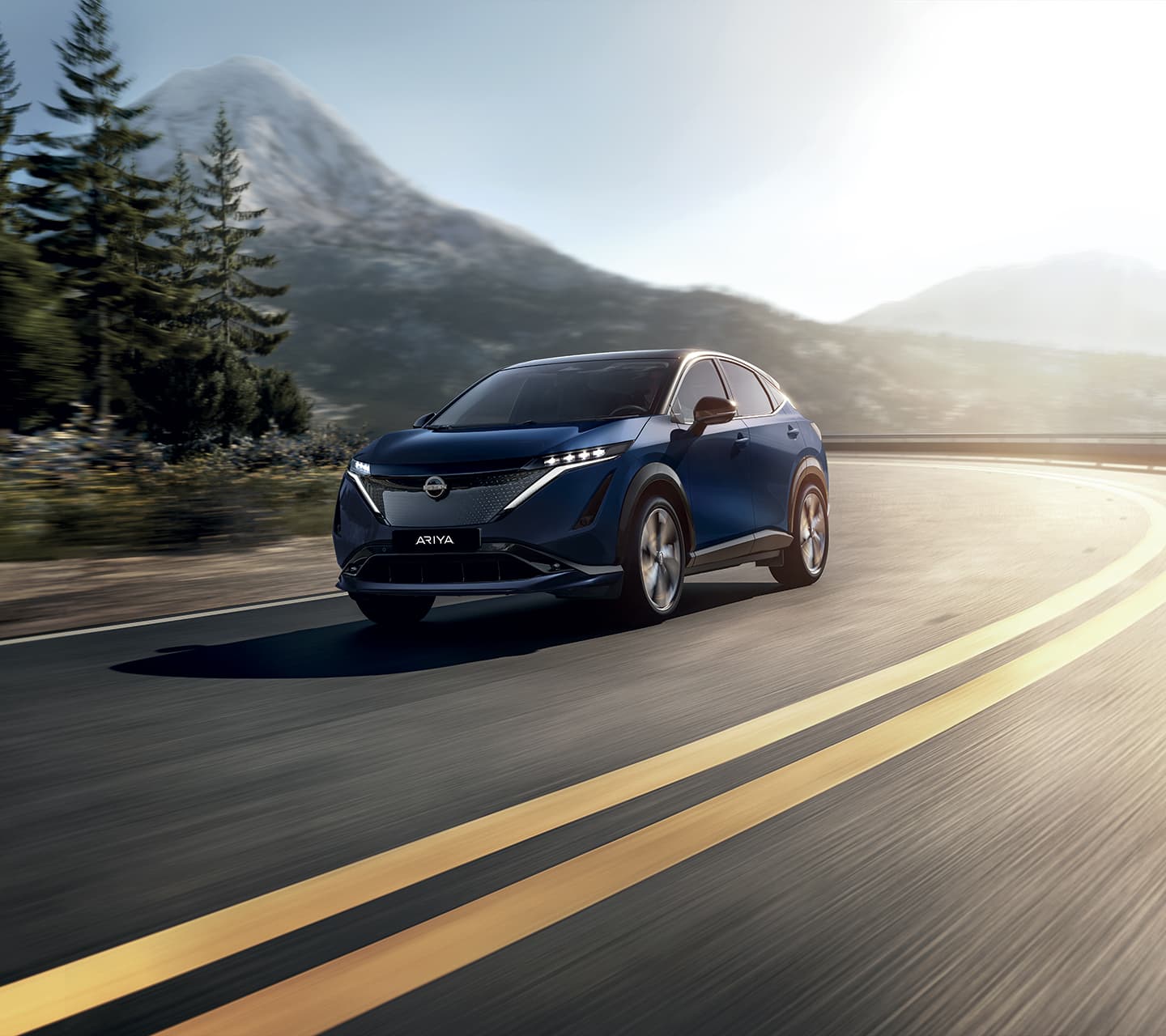
The Ariya Shiro 63 kWh is the entry-trim Ariya brief: the same comfort-first crossover shape and 63 kWh battery, but positioned for buyers who want the lower spend rather than maximum AC charging hardware.
Useful if long-distance confidence matters most.
Charging convenience depends on the network near you.
The Ariya 63 kWh 22kWCh keeps the smaller-battery Ariya ownership brief but makes it easier to live with if you regularly use three-phase destination AC charging, because it can meaningfully shorten compatible wallbox sessions versus the 7 kW car.
Useful if long-distance confidence matters most.
Charging convenience depends on the network near you.
What tips the decision
What keeps it honest
Common questions
Choose Shiro if the lower-trim Ariya package covers your needs and charging mostly happens at home. Choose the 22 kW derivative if compatible destination AC charging is common enough to save real time.
The biggest differences are these: Shiro keeps the Ariya's comfort-first crossover format at the more price-disciplined end of the range; The 22 kW derivative has a clearer advantage for buyers who can actually use three-phase AC charging; and Both retain credible 130 kW DC charging for occasional longer-distance use.
The main tradeoffs are these: Shiro's slower onboard AC charging is less attractive if you rely on high-power destination AC rather than home charging; and Neither 63 kWh Ariya is the strongest choice for frequent motorway days compared with the larger-battery 87 kWh variants.
Sources
Reviewed 2026-06-06
Next step
Other comparison pages
Browse the rest of the curated comparison pages for this market.